The town the line made
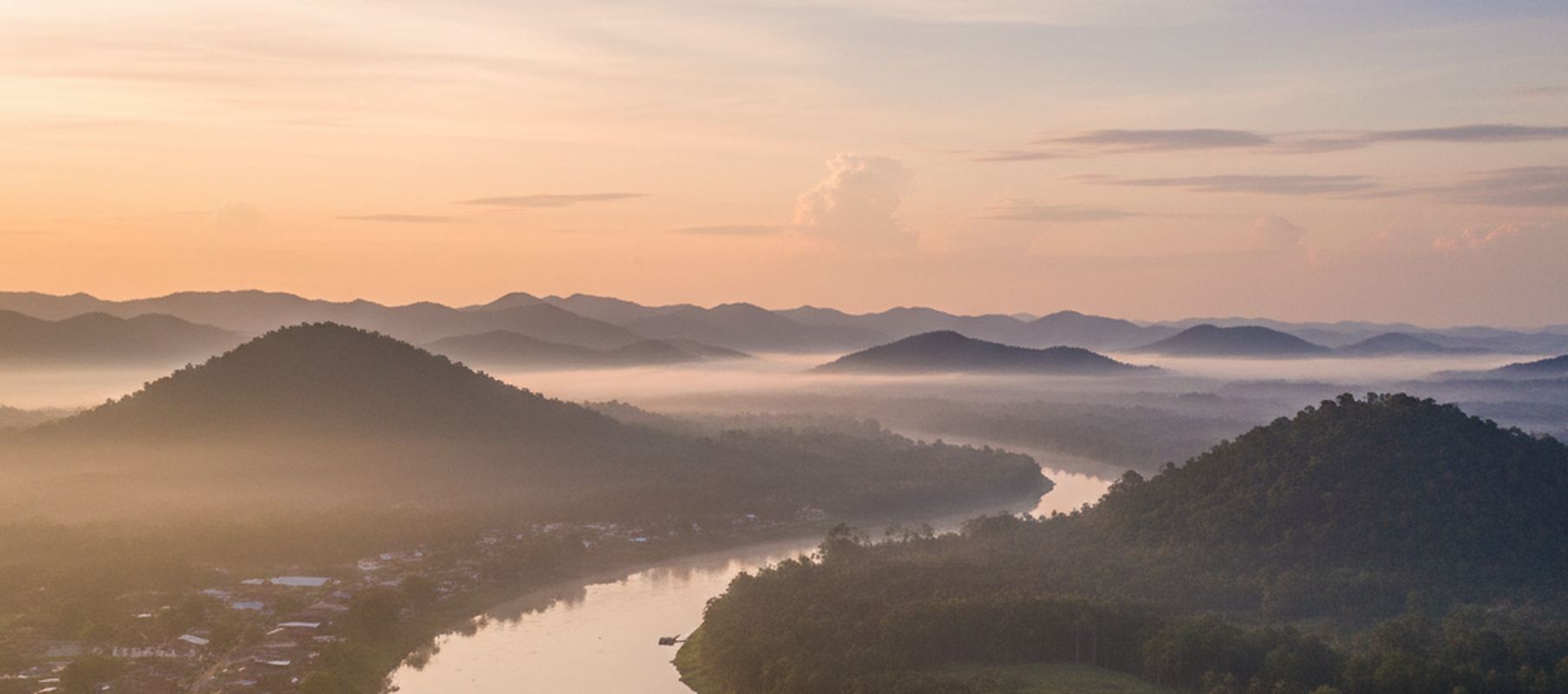
A Kuala Lipis vacation package is built around a railway timetable, and there is no honest way around that. The town stands where the Lipis river runs into the Jelai, in the interior of Pahang, and it took its present shape because the line through the interior was pushed northward in stages between 1910 and 1931. Everything else followed the track.
From 1898 until August 1955 this was the capital of Pahang, which is why a place of roughly twenty thousand people carries a set of government buildings out of all proportion to it. When the capital moved to Kuantan the offices stayed, the railway stayed, and the town settled into being a district seat again.
Two nights is the right length. One night means arriving and leaving on consecutive services with no day in between. Three begins to run out of town. What you get with two is a full day on foot here and a morning that belongs to the line, whichever direction you take it.
The offices above the town
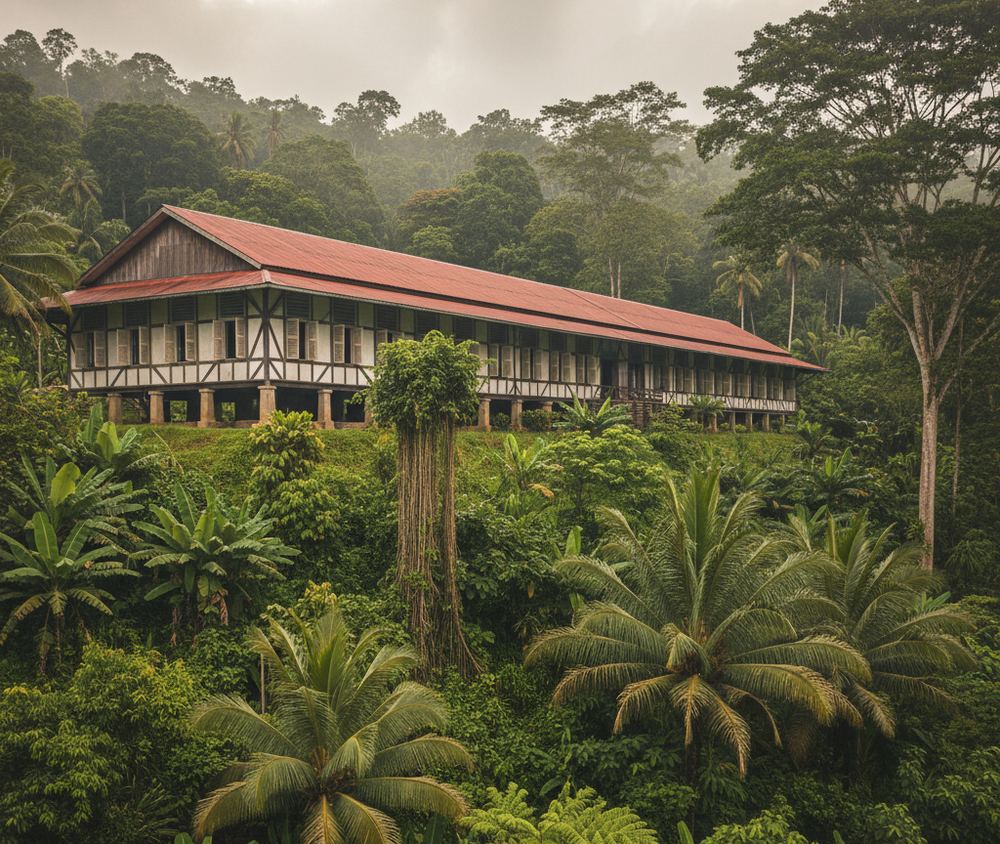
The administrative quarter sits above the town on the ridge, reached by a climb that is short but steep enough to notice in the afternoon. The district offices are long, low and deeply verandahed, built to keep sun and rain off clerks who worked with the windows open. Several of the buildings up there are shuttered and have been for years.
Clifford School is on the same high ground and is a working school, so you look at it from the road and do not wander in. The old club building near the hospital and the Resident's house on Bukit Residen complete the set. Some are in use, some are not, and which is which changes; nobody here treats them as a visitor attraction.
This is an hour or two of walking, not a day. If you came expecting interpretation boards, guided access and restored interiors, you will be disappointed. What is here is a hill of government architecture in a small river town, most of it locked, and the interest is in why it was ever built at this size.
The market hall and the shophouse streets
The market hall works to its own hours, which are early. Stallholders set out before dawn and the serious part of the morning is over by the time most people have had breakfast. Go at first light or accept that you are seeing the end of it. Whether it is busy on the morning you are there depends on the day and the season, and nobody can tell you that in advance.
Jalan Besar is the old commercial street, a run of two story shophouses with painted walls and metal shutters, some still open, some empty. Jalan Jelai follows the water down to the jetty. The wooden mosque stands a short walk from the station, and the Chinese temple in town was first put up in 1898 and rebuilt in 1926 after a flood.
There is a small heritage museum in town covering the district's history. Opening days for a museum of that size are not something to plan a morning around without checking locally first, and we do not print hours we cannot stand behind. The staff where you are staying will know the current position.
North up the line
The line north of Kuala Lipis is the reason to be here for a second morning. It is single track and meter gauge, running roughly 528 kilometers in total between Gemas and Tumpat through the middle of the peninsula, and the stretch above the town runs into closed forest almost at once. Trains wait in passing loops for the service coming the other way.
Merapoh is the place up the line that matters most, on the northern edge of the district, where Sungai Relau gives one of the ways into Taman Negara and one of the starting points for Gunung Tahan, the highest mountain on the peninsula at 2,187 meters. We do not include the mountain in two nights. It is a serious walk over several days.
A seat on this line is not a viewing car. The windows are what they are, the forest comes right up to the track in places and opens out in others, and for long stretches you see embankment. People who want a spectacle every minute should not come. People who like watching a working railway do its job will be content.
The rivers, the gold, and who should not come
Gold was worked in this district long before the British administration arrived in 1887, and it is part of why the town is where it is. There is no restored mine to walk through. What survives is in place names, in the district's own record, and in the shape of the settlement, which is a thing to read rather than a thing to visit.
From the jetty on the Jelai, boats run out towards Kenong Rimba, a protected forest of about 128 square kilometers that shares a boundary with Taman Negara. Caves and walking tracks are the draw. Getting there takes most of a day once you add the river and the road, so it competes with the town, and in two nights you choose one.
Plainly: both rivers flood, and the district has been cut about by water more than once in living memory. The heat is heavy and the walking is on tarmac in the sun. Rooms in town are simple. If you need a lift, room service or a menu in English at every meal, this is the wrong entry in the catalog.
What here answers to somebody else and not to you
- The interior line carries only a small number of services each day in each direction, and the published schedule is confirmed with you at the time of booking rather than quoted here.
- We could not verify a current suspension, reconstruction or road replacement on any section of the line at the time of writing, and we will not state one either way without confirming it first.
- Both nights are held around the service you travel on, so the arrival day and the departure day are fixed before anything else is arranged.
- The market hall runs to its own early hours, which is to say the market morning and a morning on the line cannot be the same morning.
- Heavy rain has disrupted services on this line in past seasons. If that happens during your stay we rearrange the ground days; we do not run a replacement road service of our own.
The hatching beside each price says how much of the trip runs to somebody else's timetable: one line for none of it, four for a trip built around fixed departures from the first morning to the last.
What the figure holds and what it leaves to you
Held inside the figure
- Two nights in a simple room in Kuala Lipis, based on two people sharing one room.
- A local guide for one full day on foot in the town and on the ridge above it.
- A reserved seat on the interior line for the journey set out in your itinerary.
- Transfer between the station and your room on the arrival day and the departure day.
- A written day plan built around the confirmed schedule, sent to you before you travel.
- Breakfast on both mornings, served early enough to reach the market hall first.
Left outside it, on purpose
- Reaching Malaysia and getting home again; the price covers ground arrangements only.
- Any flight and any sea crossing, neither of which this office arranges at all.
- Meals other than the two breakfasts, and all drinks throughout the two nights.
- The boat and the entry charge for Kenong Rimba, if you choose that day instead.
- Personal spending, laundry, and anything bought in the market or on Jalan Besar.
- Any night before or after the two nights described on this page.
A price on this site covers the ground only: the rooms, the named transfers between them, and the people who meet you. It does not cover getting to the country or leaving it.
Everything above is held provisionally until the schedule on the interior line is confirmed in writing and you have agreed the two dates.
The months this one is worth the journey
The interior of Pahang gets its heaviest rain with the northeast monsoon, roughly November into January, and that is when the Jelai and the Lipis rise. Flooding in this district is not a rare event. Railway services through the interior have been disrupted by water in past seasons, and river trips towards Kenong Rimba are the first thing to be called off.
February through September is the steadier run for a two night stay, and May to August is when the ground days most often hold together. That is a statement about how often the arrangements work, not a forecast. It rains hard here in any month, and we will not tell you what the sky will do on your two days.
What this one will join to
- the Pahang and Kelantan vacation package, A seat on the interior line, north from Kuala Lipis to Wakaf Bharu, then a short road transfer into Kota Bharu., Most of a daylight ride. We put the exact departure and arrival in writing when your seats are held rather than quoting you a number now.
- Taman Negara and Kuala Lipis vacation package, Road, in two legs, with a change at Jerantut, About three hours moving, and close to four and a half once the change at Jerantut is counted. Roughly 67 km down the park road, then about 60 km on.
Send us the two dates you have in mind and we will tell you which services they can actually be built around.
Asked about this one more than once
- Can I do this without using the railway?
You can reach Kuala Lipis by road, and some people do. But the line is the subject of this entry and the second morning is built on it, so a road only version is a different trip and we would rather plan that one with you separately.
- Is the market hall open every day?
It runs early, and the strength of any given morning varies by day and by season. We will not promise you a full market. Plan to be there at first light and take the morning as you find it.
- What does 610 actually cover?
The figure of 610 is per person and assumes two people sharing one room. It covers two nights of ground arrangements only: the room, one guided day, the station transfers, a reserved seat on the interior line and two breakfasts. It is not a total for a couple, and it includes nothing about reaching Malaysia.
Reserve a month rather than a date
Tell the office which month you have in mind and it will answer with what that month makes possible and what it shuts.