The four nights in Kuala Lumpur
The first half of a Kuala Lumpur and Ipoh vacation package sits in the old money end of town, the tight grid of shophouses between the two rivers that gave the city its name, which translates as muddy confluence. The mosque at the junction of the Klang and the Gombak opened in 1909, pink and white brickwork, still a working mosque with its own hours for anyone coming to look. Ten minutes from there are the roofed markets with the wet floors, busiest before seven and thinning out by the middle of the morning, and the temples sit in the same few streets.
The rest of it is walking and eating. The stall streets work in shifts, one set of cooks on a pavement in the morning and a different set on the same pavement at night, and plenty of them shut one day a week that is not Sunday. A hill of old forest was left standing inside the city, gazetted in 1906 and down to about nine hectares now, with marked trails through it; that is a morning, not a day. The museums are spread out, and the national one stands beside the station you leave from. Thirteen kilometers north, a limestone hill holds a temple with 272 steps up to the mouth of it, reached on the commuter line from that same station.
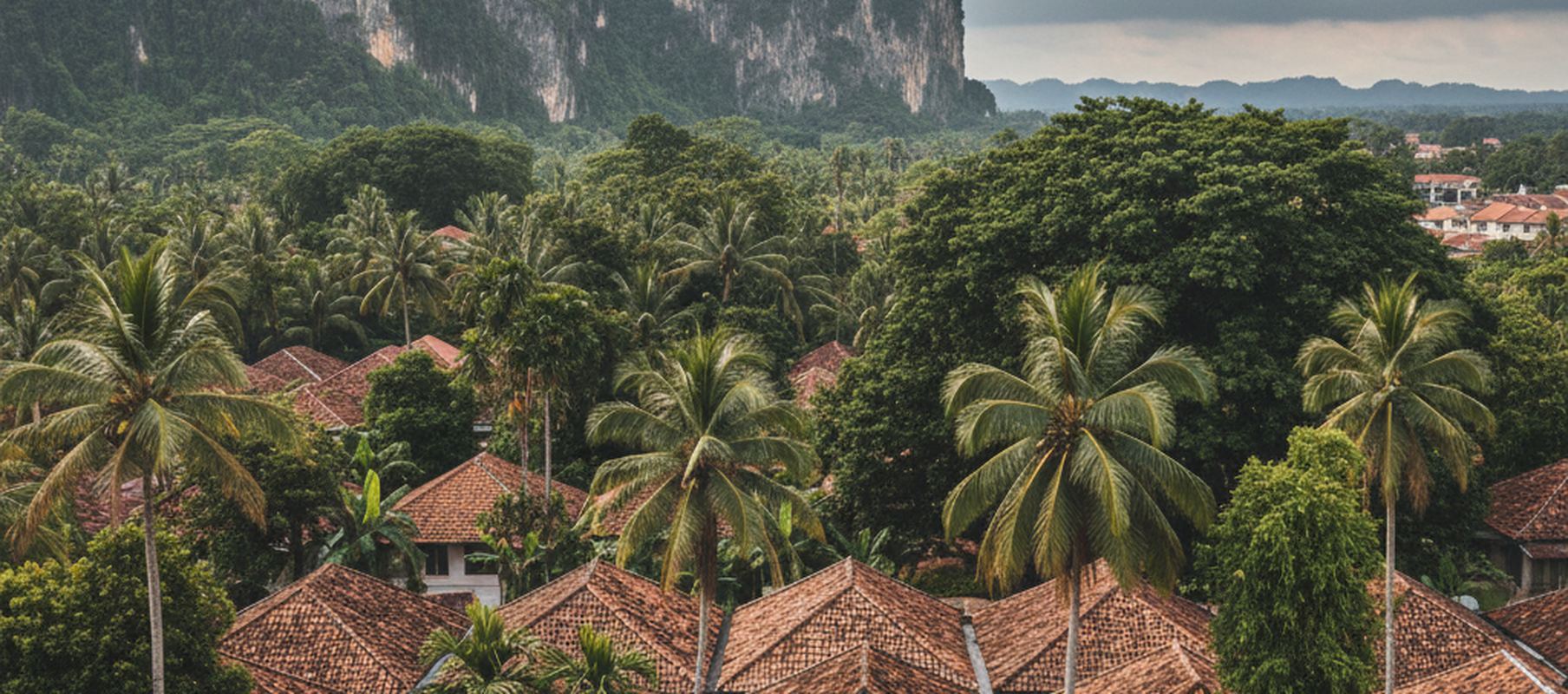
The four nights in Ipoh
Ipoh grew on tin from the 1880s and the money still shows in the old town: two and three story shophouses, a clock tower, a lane behind the main street barely wide enough for two people to pass. The Kinta river splits the place, old town on one bank and the newer grid on the other, and you cross it several times a day without thinking about it. The coffee is its own thing, roasted dark with margarine and served short and sweet over condensed milk, and the plain looking plate of poached chicken with a heap of fat sprouts is what people come into town to eat.
Around the edges stand the mogotes, limestone towers coming straight out of flat ground, with temples built into their caves. Three of them take visitors and they are not alike: one is a long stair inside the hill, another walks through to open ground at the back. On the Tambun side a cliff face carries a panel of neolithic painting, somewhere between two thousand and twelve thousand years old, and the path up is muddy and overgrown with a steep flight of steps at the end. Hot water comes up at the foot of the hills on that side of town, and the Kinta valley has been a national geopark since 2018, which is why so much of what you do here is rock.
The one thing that runs to a clock
Everything on these eight nights is loose except the train. You choose your own days for the markets, the cave temples and the caves at Gopeng, and nothing is held in your name except the two rooms and the ride on day five. That suits people who hate being walked around in a group, and it irritates people who want a printed schedule with times on it.
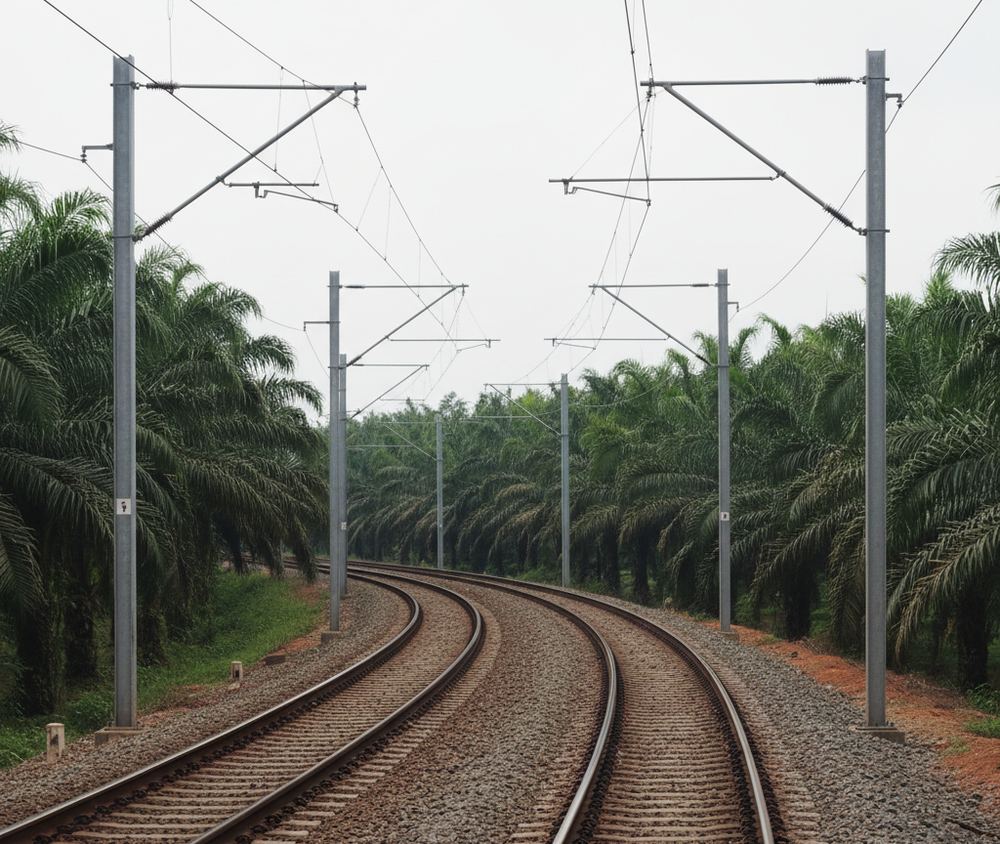
On day five you check out in Kuala Lumpur, get yourself to the station and step off in Ipoh either before lunch or in the middle of the afternoon, depending which service you are on. Your bags stay with you the whole way. It is the only morning of the week where a clock matters, and this is the least demanding connection in the catalog: the track is electrified, the train is frequent, and a missed one is an annoyance rather than a lost day.
What this takes out of you
The heat does not let up. Daytime highs sit in the low to middle thirties Celsius, the nights barely drop, and the Klang valley draws thunderstorms about as often as anywhere on earth. The rhythm most people fall into is two or three hours out, then an hour under a fan, then out again after four. Anybody who wilts in wet air should read that sentence twice before booking.
The walking is on broken pavement and curbs that come up to your knee, in traffic that will not stop for you. The 272 steps at the cave temple are in full sun with no shade on them. The longer routes inside the cave south of Ipoh go through water, on your hands and knees in places, and nobody makes you do them. Changing cities in the middle means packing twice and living out of a bag for eight nights. If that reads as too much work, the single place entries in this catalog are there for exactly that reason.
The move in the middle
You leave from KL Sentral, a transfer hall in Brickfields that opened in 2001 and has no charm in it whatsoever. What you arrive at is the other extreme: Ipoh station, finished in 1917, white arches and little towers, by the same architect who built the mosque at the river junction in Kuala Lumpur in 1909. You come out of the front of it and you are in the old town within a few minutes of walking, bags and all.
Two classes run this stretch and the difference is mostly how many stations the train calls at, not the size of the seat. The quick one stops about four times, the slower one about twelve, and both are air conditioned with a rack at the end of the carriage. Seats go on sale a good while before the date and the window moves around, so the office books yours as soon as your dates are fixed and sends you the service number, the carriage and the seat. Whatever is sold on board changes by service, so most people carry a drink on with them.
- How
- Electric intercity train, west coast line, KL Sentral to Ipoh station
- How long
- Two hours on the services that stop least, about two hours thirty five minutes on the ones that call at a dozen stations. The distance is roughly 181 km.
- How often
- Around eleven departures each way on an ordinary day. Four of them begin or end at Ipoh, and the rest are running through to the far north.
- Who runs it
- The state railway on its west coast line. The office books the seat in your names, so you are not standing at a counter on the morning you move.
Each end taken by itself
- reserve a Kuala Lumpur vacation package, 4 nights, $1,290 on its own
- Ipoh vacation package in Perak, 4 nights, $1,120 on its own
Eight nights, two rooms, one seat with your name on it. The figure is the four nights in Kuala Lumpur, the four nights in Ipoh and the ride between them, added up. Nothing comes off for taking them together and nothing is put on. Per person, two of you sharing one room, ground only.
Clocks that run this pair
- Days 1 to 4, Kuala Lumpur. Nothing is booked. Markets early, museums when the sky goes black, the cave temple north of the city on whichever morning you feel like the steps.
- Day 5, the move. Check out, cross to KL Sentral, ride the west coast line, walk out of Ipoh station into the old town. The only timed item of the week.
- Days 5 to 8, Ipoh. Four nights. The half day car for the Kinta valley goes on whatever day you name once you are there.
- Day 9, out. The trip ends in Ipoh after breakfast. Getting yourself onward is your own arrangement, and most people take the same line back down.
What the figure holds and what it leaves to you
Held inside the figure
- Eight nights of rooms, four in the old core of Kuala Lumpur and four in Ipoh old town, two people to one room.
- One reserved seat each on the electric intercity train from KL Sentral to Ipoh station, booked in your names, with the service number, carriage and seat sent to you in writing.
- The road transfer at each end between station and room, bags included.
- A half day car with a driver in the Kinta valley, for Gopeng and the limestone, on a day you name after you arrive.
- A written sheet of opening and closing days for the markets, the cave temples and the museums, checked in the month you travel.
- One person in Seattle who wrote the booking and who answers while you are away.
Left outside it, on purpose
- Getting to Malaysia and getting home again. The price starts with you standing in Kuala Lumpur.
- Every meal and every drink. What you came to eat is sold on the street a few ringgit at a time.
- Entry charges at the cave temples, the museums and the caves at Gopeng, all paid at the door.
- Cars, drivers and taxis beyond the half day above. Both cities have metered taxis and both have trains.
- A guide walking beside you. Nobody meets you at a market gate to explain what you are looking at.
- Anything outside the two valleys. This entry does not sell the islands, the highlands or the east coast.
A price on this site covers the ground only: the rooms, the named transfers between them, and the people who meet you. It does not cover getting to the country or leaving it.
Before anything is issued you get in writing: both rooms and their street addresses, the service number and departure time of your train with the carriage and seat, the half day car, and the figure per person with two of you sharing. What is never confirmed, because nobody can: the weather, what is open on a given day, and whether a stall somebody wrote about last year is still standing.
The months this pair holds together
Rain is not a season you can dodge here, it is a pattern. Kuala Lumpur takes more than 2,600 mm a year, wettest from October through March with November the heaviest of them, and June to August is the drier stretch while still running over 130 mm a month. Ipoh holds around 28 Celsius all year and October is its wettest month at roughly 307 mm. The shape of a day in that pattern is often a clear morning, cloud stacking up after lunch, an hour of hard water and a cooler evening. Often is not always.
None of that is a promise about your eight days and the office will not make one. In some years smoke from fires elsewhere in the region drifts across and flattens the light for a week or two, and it cannot be called in advance from Seattle. Two things follow. Rain is warm and you can keep walking in it, which is why the covered markets and the museums get done on the wet mornings. Cave floors and the path to the painted cliff turn slick, so those are the days to move, and on this trip you can move them, because only the train is fixed.
Asked about this one more than once
- Can we run it the other way, Ipoh first?
Yes. The same eight nights, the same two halves, and the seat is booked for whichever day the move lands on. Most people take it in this order because the second half is the quieter one, but that is taste rather than a rule, and the figure does not move either way.
- Do you book the flight into Malaysia?
No. This office arranges ground trips inside Peninsular Malaysia and nothing else, so the price begins once you are standing in Kuala Lumpur and ends when you walk out of the room in Ipoh. Sea crossings are not arranged either, and nothing in the catalog includes getting to the country.
- What happens if we miss the train?
The seat is issued for one named service, so a missed one is bought again at the station counter on the day, in person, and an issued ticket cannot be altered from Seattle. There are several more departures in each direction that afternoon, which is the whole reason this pairing is put together the way it is.
Reserve a month rather than a date
Tell the office which month you have in mind and it will answer with what that month makes possible and what it shuts.