What the three nights are
A Melaka vacation package here means three nights and ground arrangements only. We hold a room in a converted shophouse in the old quarter, arrange the road transfer in and out, put a guide with you for one morning, and pay for the entries and the class named below. Getting yourself to Malaysia is your own business and is not in the price.
Half of it answers to a clock you do not set. The street market runs on three evenings, two of the houses you want to walk through close on two different weekdays, the boats keep posted hours, and the cooking class starts when it starts. The other half is yours: the streets are short and you walk them.
The price is $960 per person, on the basis that two of you share one room. Nobody who wants quiet will enjoy the weekend evenings, when the main street is shut to traffic and lined with stalls. Nobody who dislikes heat will enjoy the climb at midday. The town is flat, the hill is not, and the steps are uneven.
The red square and the hill behind it
The square is small and it is red. The Stadthuys, built by the Dutch in 1650, held the governor and now holds the history and ethnography collection. Christ Church next to it was finished in 1753, Dutch brick on local laterite under Chinese plaster, and it was white until 1911. The trishaws wait on the paving between them, each one decorated by its own driver.
Inside the church, each ceiling beam was cut from a single tree. The floor is granite that came out of ships as ballast, and some of the paving is old tombstones with Portuguese and Armenian lettering still legible. Services still run on Sunday mornings, in English at half past eight and in Mandarin at eleven, and the doors open to everyone else afterward.
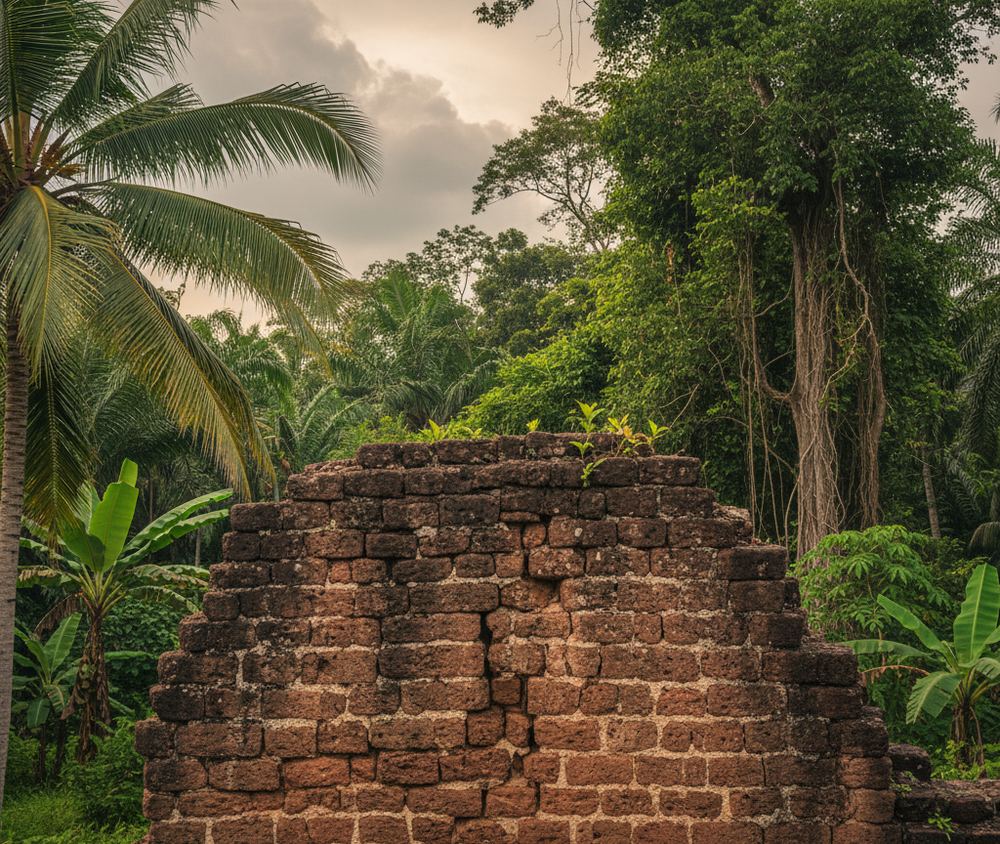
Behind the square the ground rises to St Paul's Church, built between 1566 and 1590 and roofless for a long time now. Tombstones stand along the inside of the walls. Francis Xavier lay in the floor here for a few months in 1553 before he was moved to Goa, and the open grave is marked. Below it, the Porta de Santiago is all that is left standing of the Portuguese fort.
Jonker Street, Goldsmith Street, and what is still made there
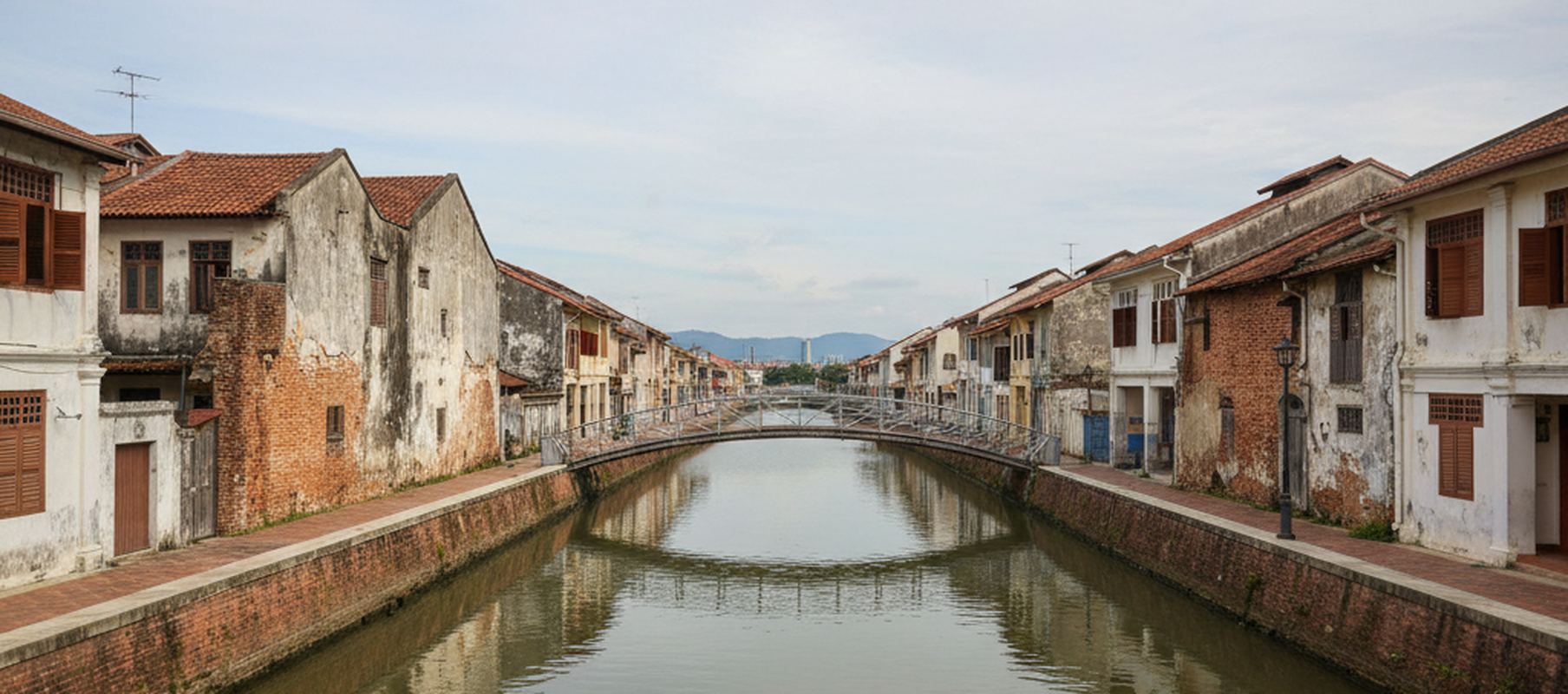
Jonker Street is Jalan Hang Jebat on the map, and the street of long houses behind it is Jalan Tun Tan Cheng Lock. The fronts are narrow and the houses run a long way back, room after room, with an air well part way along to let light and rain in. Glazed floral tiles are set into the lower walls and carved shutters sit above them.
One block over, Jalan Tukang Emas means Goldsmith Street and it earns the name: gold is weighed and sold along it. It also carries three religious houses within a few doors of each other. Cheng Hoon Teng at number 25 Jalan Tokong dates from 1645, and parts of it were put up in 1673 with materials shipped from China.
Kampung Kling Mosque went up in wood in 1748 and was rebuilt in brick in 1872, with a minaret shaped like a pagoda, English and Portuguese glazed tiles, and Ionic columns in the prayer hall. Sri Poyatha Moorthi, built in 1781 by Thaivanayagam Chitty, is the oldest standing Hindu temple in the country. Between them, small workshops still make kasut manek, the beaded slipper, one glass bead at a time.
The river, the village on it, and Ujong Pasir
The river cuts the old town in two and the walkways run along both banks, so most of your walking happens beside it. Boats leave from the Taman Rempah and Quayside jetties every day from nine in the morning until eleven at night. The circuit is about nine kilometers and takes roughly forty five minutes, and it passes the backs of the houses rather than their fronts.
Upstream of the old town is Kampung Morten, a Malay village inside the city, named after a British revenue collector and protected under a state enactment in 1989. More than a hundred timber houses stand there, raised off the ground and reached by front steps. One of them, Villa Sentosa, is still lived in and shown by the family who own it.
Southeast of the center, at Ujong Pasir, is the Portuguese Settlement, called Kampung Portugis in Malay and Padri sa Chang in Kristang. Around a thousand people live there, descended from the Portuguese period that ran from 1511 to 1641, and the language is still spoken. Medan Portugis, the square by the water, opened in 1985, and that is where residents run the kitchens. Ask for curry debal and for baked fish.
Nyonya kitchens, and what comes out of them
Nyonya cooking is what happened when Chinese households cooked with Malay ingredients for generations. It starts with rempah, the spice paste, pounded in a stone mortar rather than blitzed: candlenut, lemongrass, galangal, shallot, chili, belacan. There is an old line that a household could judge a new daughter in law by the sound of her pounding. You do this yourself in the class, and your arm will complain.
The names worth learning: ayam pongteh, chicken stewed with fermented soy bean and palm sugar; itik tim, a duck soup with preserved vegetables; asam pedas, fish in a sour tamarind gravy; kerabu salads; popiah rolled to order; and ayam buah keluak, which needs its nut buried and soaked for days before it can be cooked at all.
Afterward there is cendol: pandan green strands of rice flour in coconut milk over shaved ice, with gula melaka poured across it, the palm sugar that carries the town's name. Melaka also serves its chicken rice pressed into balls instead of spooned into bowls. For the house itself, the Baba and Nyonya home at 48 and 50 Jalan Tun Tan Cheng Lock is open to walk through, though not on Tuesdays.
What here answers to somebody else and not to you
- Jonker Street becomes a night market on Friday, Saturday and Sunday evenings only, roughly six until midnight, with the street closed to traffic. Monday through Thursday it does not happen at all and the street is an ordinary street after dark. This catches people out more than anything else here.
- The state museums, including the collection inside the Stadthuys, are shut on Mondays and open nine until half past five the rest of the week. The Baba and Nyonya house is the other way around: shut on Tuesdays, open ten until a quarter past four on other weekdays and ten until a quarter to five at weekends. Three nights reaches both, but never on the same day, and not if you leave either to your last morning.
- Christ Church on the square is shut on Mondays, open nine until half past four Tuesday to Saturday with a half hour break at one, and on Sunday it opens to visitors after the services, English at half past eight and Mandarin at eleven.
- River boats run daily from nine in the morning until eleven at night, from the Taman Rempah and Quayside jetties, and the circuit takes about forty five minutes. You go when the boat goes, not when you arrive at the counter.
- The Nyonya cooking class has one posted start in the morning, and the market shopping happens before the kitchen work begins. That whole morning answers to somebody else, and the class will not hold itself for a late arrival.
The hatching beside each price says how much of the trip runs to somebody else's timetable: one line for none of it, four for a trip built around fixed departures from the first morning to the last.
What the figure holds and what it leaves to you
Held inside the figure
- Three nights in a converted shophouse room in the old quarter, two people to one room, with air conditioning and breakfast.
- Road transfer by private car between Kuala Lumpur and Melaka at the start of the stay and at the end of it.
- One guided morning on foot through the old quarter, with a guide who works in English.
- Entry to the museum inside the Stadthuys and to the Baba and Nyonya house on Jalan Tun Tan Cheng Lock.
- A Nyonya cooking class, the market shopping that comes before it, and the meal you cook and then eat.
- One river boat circuit and one trishaw ride, with the trishaw price settled with the driver before you sit down.
Left outside it, on purpose
- Getting to Malaysia and home again. This office arranges nothing that flies and nothing that sails, and the price starts once you are in the country.
- All meals except the breakfasts and the one you cook in the class.
- Drinks of any kind, including the coconut water you will want halfway up the hill.
- Entry to anything not named in the list above, Villa Sentosa and the Maritime Museum among them.
- Transport out to Ujong Pasir and back on the evening you eat at Medan Portugis.
- Anything you buy on Jalan Tukang Emas or off a market table. Gold there is weighed and priced on the day.
A price on this site covers the ground only: the rooms, the named transfers between them, and the people who meet you. It does not cover getting to the country or leaving it.
We hold the room and the place in the class once you confirm in writing, and we tell you the two closing days before you fix your arrival day rather than after it.
The months this one is worth the journey
Rain falls here in every month of the year. On the long record February is the driest at about 80 mm, with January and March behind it at roughly 102 and 129. November is the wettest at about 233 mm and August is close at about 220. Daily mean temperatures sit between about 26.7 and 28.2 degrees Celsius across the whole year, so the heat does not really have a season and you should not pack as though it does.
Melaka sits on the strait side of the peninsula, so the wet months that close the east coast beaches work differently here; what the west coast gets instead is heavy afternoon rain that arrives and then leaves. Nothing in this itinerary depends on the sky. The climb to St Paul's and the riverbank walkways are simply the two parts you would rather not be doing in a downpour, and both can wait an hour.
What this one will join to
- Kuala Lumpur and Melaka vacation package, Scheduled coach, expressway, About 2 hours 15 minutes
Tell us the day you would arrive and we will tell you what that day closes and what it opens.
Asked about this one more than once
- Is three nights enough for Melaka?
For the old quarter, the hill and the river, yes. The whole of it sits inside a few blocks and you cross it on foot. Three nights is what it takes to catch one market evening, get one museum day that falls on neither a Monday nor a Tuesday, and still have an evening free for Ujong Pasir without moving at speed.
- Do we have to be there over a weekend?
If you want the street market, yes, because it runs on Friday, Saturday and Sunday evenings and on no others. If you would rather see the shophouse streets without stalls down the middle of them, come midweek and accept that the street will be quiet after dark. We will say plainly which of the two you are choosing before you book.
- How much walking is there, and how hard is it?
The town is flat and the distances are short, so the walking is easy apart from the hill. The steps up to St Paul's are stone, uneven, and open to the sun for most of the climb, and there is no other way up on foot. Anyone who cannot manage steps should plan to skip the church and look at the gateway from the square instead.
Reserve a month rather than a date
Tell the office which month you have in mind and it will answer with what that month makes possible and what it shuts.