Five nights that answer to almost nothing
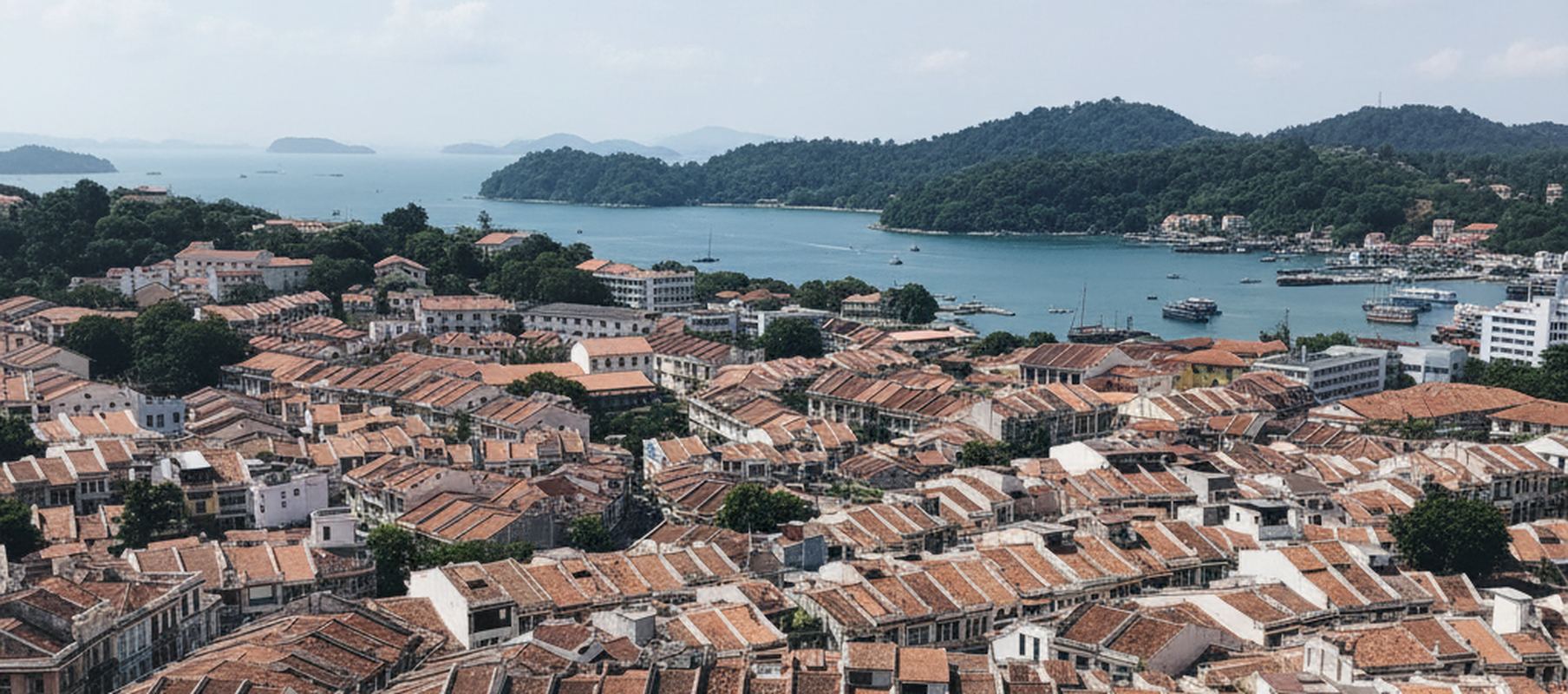
Penang's old port city hands you a grid small enough to walk across and a week of reasons not to rush it. The George Town vacation package runs five nights inside the heritage core, on foot, with one guided morning fixed in advance and every other day left to you. The zone UNESCO inscribed in 2008 covers about 109 hectares, with a buffer of roughly 150 more around it.
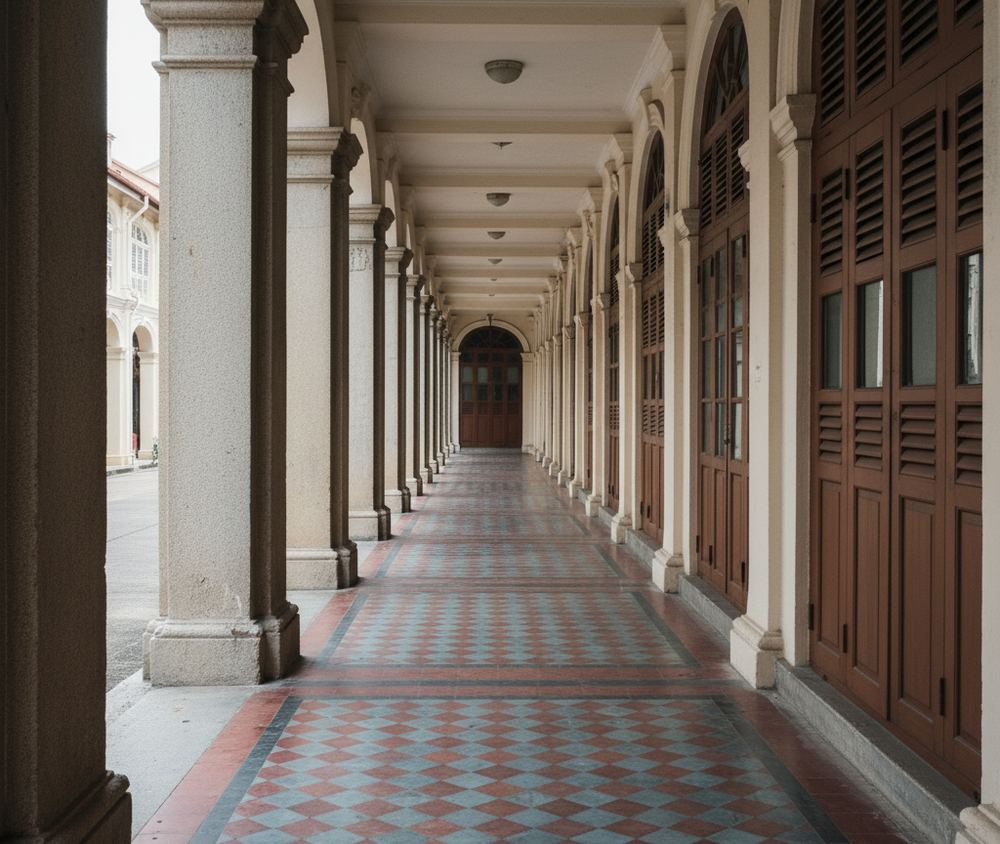
Francis Light's original streets are still the ones you use. Light, Beach, Chulia and Pitt set the bones in the 1780s and 1790s, and the blocks between them fill with two story shophouses, narrow at the street and long at the back. Rain, when it comes, arrives hard and leaves quickly. The covered walkway in front of every shophouse, the five foot way the Straits settlements copied from an 1822 town plan, is where you wait it out.
Five nights is the length at which a city turns from a list into a routine. You start noticing which coffee shop opens at six and which lane floods first. Two of you sharing one room pay 1460 US dollars each for everything on the ground here. Carrying yourself to Malaysia is your own job, and the number above leaves it out entirely.
The grid, and what is actually on it
Begin at Cannon Square, where the Khoo clan rebuilt their hall between 1902 and 1906 after the first one burned in 1901. Granite paving, a theater stage facing the hall across the square, carved beams cut by craftsmen brought over from China. Opera is still staged there in the seventh lunar month. The lanes around it are too narrow for two cars and were laid out before cars.
Lebuh Armenian was Malay Lane until Armenian traders gave it the name in 1808. Their church went up in 1822 and came down in 1937, and the street kept the name regardless. Sun Yat Sen held a fundraising conference in a townhouse here in 1910, and that house opened as a museum in 2002. The painted children on a bicycle a few doors along is the wall everybody photographs, and it is rarely empty.
Two working buildings sit a few minutes apart on Jalan Masjid Kapitan Keling. The mosque founded by Indian Muslim traders was finished in 1801 and given its ochre skin, horseshoe arches and marble floors in a rebuild of 1930. The Hindu temple, put up in 1833 and the oldest in the state, fronts Lebuh Queen with a gopuram carrying thirty eight figures and four swans, and backs onto the same road.
Up the hill, and the long way down
The funicular leaves from Air Itam, on the inland edge of the city. Two kilometers of track, a maximum gradient near 53 percent, four and a half minutes to the upper station at Flagstaff Hill, 735 meters up. The line opened in 1923 and was rebuilt across 2010 and 2011. The same suburb holds Kek Lok Si, begun in 1890, its seven story pagoda finished in 1930 with a Chinese base, a Thai middle and a Burmese crown.
It runs about five degrees cooler up there than in the streets below, which is why the British put bungalows on the ridge from the end of the 1780s onward. A mosque and a Hindu temple both stand at the summit. The funicular shuts twice a year for scheduled maintenance, so read the operator's notices before you build a day around it, and expect a queue at the lower station when it is running.
The walking route is a 5.1 kilometer tarred road from the quarry entrance at the Penang Botanic Gardens, two to three hours at an unhurried pace, climbing the whole way, with the humidity doing the rest. The gardens date from 1884, cover 29 hectares and sit below a waterfall that drops more than 120 meters. If your knees complain on descents, ride the funicular in both directions and think no more of it.
What you will eat, and where a day goes
Penang eats at hawker stalls and coffee shops, not at tables you reserve. Char kway teow is flat rice noodles thrown with prawns, cockles and egg. Assam laksa is thick round rice noodles in a sour tamarind fish broth with mint, cucumber, shredded lettuce and pineapple. Hokkien mee arrives in a prawn and pork bone stock. Nasi kandar is steamed rice under whatever curries you point at.
Many stalls close one fixed weekday and announce it nowhere you can look up. Public holidays thin the choice further, and the man who makes the thing you came for may simply not be there. Plan to eat four small dishes rather than one large one, and to walk between them. Cendol, shaved ice over green rice flour strands in coconut milk and palm sugar, is what repairs an afternoon.
Beyond the city, Balik Pulau sits 12.7 kilometers southwest over the central hills, reached by road across Jalan Tun Sardon. Nutmeg, clove and durian grow in the orchards there, and the last worked paddy fields left on the island lie among them. Durian is harvested from May into August, so outside those months you will meet it frozen or not at all. The nutmeg comes back as juice and as preserves.
The water side, and who should skip this
Seven timber jetties run off Weld Quay, each built by one Hokkien surname from the 1880s onward: Ong, Lim, Chew, Tan, Lee, Yeoh, and a mixed one dating from 1962. Two more, Koay and Peng Aun, came down in 2006. Families live on all seven. Chew is the largest and the one most walked, and by 2017 roughly three houses in ten along it had become shops. Walk quietly and do not photograph through open doorways.
The terminal for the mainland crossing stands on the same quay, beside the bus stand. Three kilometers of water separate George Town from Butterworth, and since 2021 the boats carry people, motorcycles and bicycles, not cars. The terminal itself dates from the 1960s and replaced a jetty of 1901. Crossing and coming straight back is a reasonable way to spend part of a morning, and nothing is booked for you in advance.
This will not suit you if you want conditioned air between every part of the day. George Town is walked in heat and damp, on uneven five foot ways that step up and down between shop fronts, and the traffic in the core is close and loud. Wheelchair users will find much of the old grid hard going. If what you want is a pool and a quiet resort strip, these are the wrong five nights.
What here answers to somebody else and not to you
- One thing in these five nights is set by a clock that is not yours: the guided walk through the heritage core, whose starting hour and weekday are both written into your confirmation before you travel.
- The funicular from Air Itam is posted, not reserved. Counters open around a quarter past six in the morning, cars run daily into the late evening, and the climb takes roughly four and a half minutes, so you go up when you arrive rather than when you are told. It does shut twice a year for scheduled maintenance.
- The mainland crossing from Weld Quay runs through the day and takes foot passengers, motorcycles and bicycles rather than cars, so there is no vehicle loading to plan a morning around.
- The seven clan jetties are lived on rather than opened and closed. There is no admission hour to catch on them, only the courtesy of daylight and a quiet voice.
- The mosque on Jalan Masjid Kapitan Keling and the Hindu temple on Lebuh Queen are working buildings before they are anything else, so their own use comes first and this office puts no hour of its own on either.
The hatching beside each price says how much of the trip runs to somebody else's timetable: one line for none of it, four for a trip built around fixed departures from the first morning to the last.
What the figure holds and what it leaves to you
Held inside the figure
- Five nights in a small guesthouse worked into a restored shophouse in the inscribed core, under a dozen rooms, priced on two of you sharing.
- One guided morning on foot across the heritage grid, its start hour fixed in advance, led by somebody who lives in the city.
- Funicular tickets up to the hill station and back down again, bought ahead of the day you use them.
- Entry to the Khoo clan hall at Cannon Square and to one Peranakan house museum in the core.
- Ground transfers on the island when you arrive and when you leave, by private car with a driver.
- A written plan for the five days with the walking routes marked for steps and shade, plus a sheet listing which stalls and markets close on which weekday, checked in the week you travel.
Left outside it, on purpose
- Every part of getting to Malaysia and home again. This office puts together nothing that flies and nothing that sails, and the figure covers not one meter outside the island.
- Food and drink of any kind. Penang is eaten standing up at stalls and coffee shops for small sums, and folding that onto an invoice would only spoil it.
- Entry to any building not named in the list above, including Kek Lok Si, the Botanic Gardens, the Sun Yat Sen house and the museums along Lebuh Armenian.
- The crossing to Butterworth, which is paid at the terminal on the quay on the day you decide to go.
- Anything you buy in the markets, along the jetty boards, or at the nutmeg and clove orchards out at Balik Pulau.
- Laundry, telephone, anything charged back to your room, and any day taken off the island that is not agreed in writing before you travel.
A price on this site covers the ground only: the rooms, the named transfers between them, and the people who meet you. It does not cover getting to the country or leaving it.
Settled the day you book: the five nights and the room, the weekday and start hour of the guided walk, the funicular tickets and both ground transfers, while the figure of 1460 US dollars per person can move if you travel across Chinese New Year or Thaipusam, when rooms inside the core grow scarce, or if you want a room to yourself rather than sharing.
The months this one is worth the journey
George Town sits close to the equator and the thermometer barely moves: roughly 32 degrees by day and 24 at night, the year through. What changes is the rain. The recorded annual total is about 2,477 millimetres and it falls very unevenly. October is the wettest month on the long record, near 337 millimetres. January is the driest, near 80.
Nothing here shuts for a season, which is why this entry is not flagged for monsoon. Rain tends to come in the afternoon, come hard, and be finished inside an hour or two, and the five foot ways exist precisely so that the city keeps working through it. What the wet months really cost you is the ridge: cloud can sit on the summit for days and the jeep track turns slick underfoot. Put the hill on a dry looking morning and keep a spare behind it.
What this one will join to
- the Penang and Perak vacation package, the west coast intercity line, standard class, 1h to 1h 30m
- Penang and Ipoh vacation package, The west coast intercity electric railway, mainland station to Ipoh, About one hour and forty minutes on the train, plus the water crossing before it
George Town stands on an island but joins the peninsula by road, so this office can carry you on by land to Taiping or Ipoh and pick the Straits story up in a second town.
Asked about this one more than once
- Do I need a car for these five nights?
No, and a car would mostly be something to worry about. The inscribed core is walked end to end in well under an hour and your room sits inside it. The two things beyond walking range, the funicular station at Air Itam and the orchards at Balik Pulau, are covered by the transfers in the list above. Traffic inside the old grid is heavy and parking is worse than useless.
- How much of the week is fixed for me?
One morning, and nothing else. The guided walk has a set weekday and a set starting hour, both confirmed in writing before you travel. The funicular, the jetties, the temples, the mosque and the mainland crossing all keep posted hours that you fit yourself around instead. That is why this entry carries a two on the scale rather than a three or a four.
- What is genuinely hard work here?
The heat and the damp, mainly. You are walking several kilometers a day at around 32 degrees in high humidity, on paving that steps up and down between every shop front. The hill walk from the Botanic Gardens is 5.1 kilometers of tarred road climbing the whole way and takes two to three hours. If that reads as work rather than a holiday, ride the funicular both ways and keep the days short.
Reserve a month rather than a date
Tell the office which month you have in mind and it will answer with what that month makes possible and what it shuts.